Pressure Care: Choosing Mattresses, Cushions and Beds
Pressure care is one of those areas where the right equipment quietly prevents a serious problem, and the wrong equipment, or none, lets one develop. For anyone who spends long periods sitting or lying down, the surface they rest on matters enormously. This guide explains why, and how to choose between mattresses, cushions and beds, for people and carers across the Central West and regional NSW.
Why pressure care matters
When a person stays in one position for a long time, constant pressure on the skin, especially over bony areas like the heels, hips and tailbone, reduces blood flow. Left unmanaged, that can lead to pressure injuries, which are painful, slow to heal and serious. The point of pressure care equipment is simple: spread the load, reduce the pressure on any one spot, and keep the skin healthy. Prevention is far easier than treatment.
Matching the surface to the risk
The right product depends on how much time the person spends on the surface, how much they can reposition themselves, and their existing skin condition. Higher risk needs a more active surface. Our detailed guide on choosing between foam, hybrid and alternating air mattresses breaks this down, but the short version is:
- Foam pressure care suits lower-risk users who can still shift their own weight. A good foam surface redistributes pressure and is low-maintenance.
- Hybrid surfaces combine foam with air for people at moderate risk, offering more support without a fully powered system.
- Alternating air mattresses use a pump to inflate and deflate cells in cycles, actively changing where the pressure sits. These suit higher-risk users who cannot reposition themselves.
It is not just the mattress
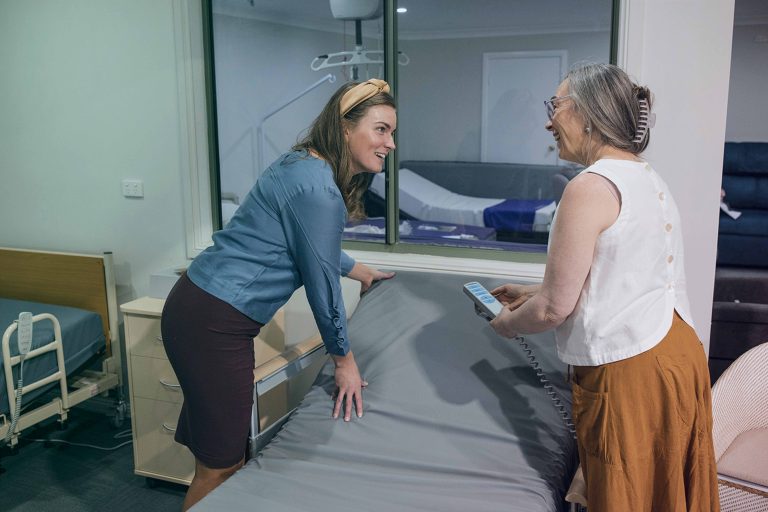
Pressure care is a system, not a single product. A person who uses a wheelchair during the day needs a properly specified pressure cushion, matched to their risk, not just a good mattress at night. And the bed itself matters: an adjustable or hospital bed that changes position helps with repositioning, transfers, comfort and circulation, and makes care safer for the person helping. The right combination of bed, mattress and cushion is what actually protects the skin across a full day.
How the NDIS funds pressure care
Pressure care equipment is funded through the Assistive Technology part of your plan. Where each item sits in the cost tiers decides the evidence required, and for higher-risk users an occupational therapist assessment makes sure the surface genuinely matches the need. If needs are changing, after a hospital stay or a change in condition, hiring a pressure mattress or bed while you wait for the right long-term item means the person is protected in the meantime.
Getting the right surface, close to home
Regency Care is one of the few suppliers in regional NSW carrying a full clinical pressure care range, and we assess alongside your OT to match the surface to the person, from our Parkes hub and across the Central West. If you are not sure what level of pressure care is needed, start with a conversation. Book an assessment or call 1300 622 122.