Power wheelchair vs manual wheelchair: how to choose the right one
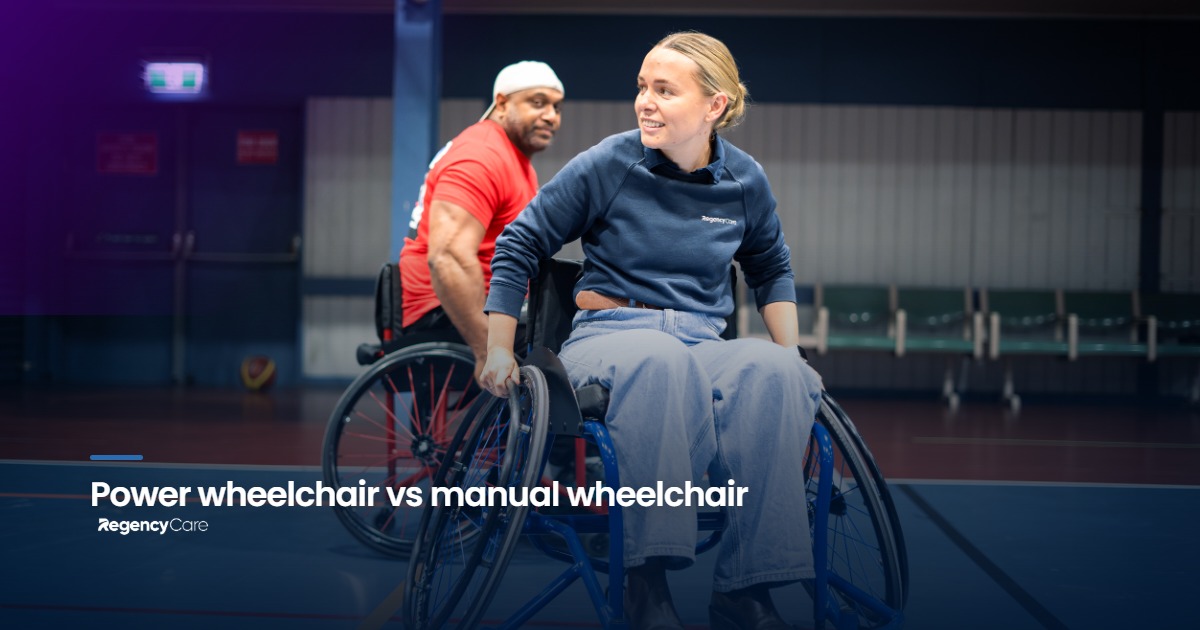
Choosing between a power wheelchair vs manual wheelchair is one of the biggest equipment decisions you will make, and there is no single right answer. The best choice depends on your body, your daily life and your goals. This guide lays out the trade-offs clearly, so you can make the call that suits you rather than the one that looks most impressive on paper. For anyone weighing up a power wheelchair vs manual wheelchair in Australia, here is what actually matters.
The key differences at a glance
Weight and transport are the most obvious difference. Manual wheelchairs are lighter and fold into a car boot. Power wheelchairs are heavier and often need a hoist or a modified vehicle to transport.
Control and effort differ too. A manual chair relies on your upper body or a carer to push. A power chair does the work for you through a joystick or an alternative control. That affects independence: a power chair can give freedom to someone who cannot self-propel, while a manual chair can keep an active user strong and mobile. Maintenance is the final piece. Power chairs have batteries, motors and electronics that need regular servicing, while manual chairs are simpler but still need checks.
Document your current equipment needs before the review
Start by taking stock of every piece of assistive technology you use. Note what is working well, what is starting to struggle, and anything you are managing without that would make life safer or easier.
Write it down in plain language. ‘My wheelchair is harder to push and my shoulders are sore by the afternoon’ tells the story better than a list of parts. The clearer your picture, the easier it is for your planner and OT to respond.
When a manual wheelchair may be the better choice
A manual wheelchair often suits people who have the upper body strength to self-propel, or who have a carer able to push safely. It is lighter, easier to transport, cheaper to maintain, and keeps you physically active.
For part-time users, or for homes and vehicles that cannot accommodate a heavy power chair, manual is frequently the practical and honest answer. Not everyone needs a power chair, and a good supplier will tell you so.
When a power wheelchair may be the right choice
A power wheelchair comes into its own when self-propelling is not safe, sustainable or possible. If pushing a manual chair causes pain, fatigue or shoulder damage, or if you cannot self-propel at all, a power chair can transform your independence and reach.
This is where an OT assessment matters most. Power wheelchairs are highly configurable, and getting the seating, controls and drive settings right is the difference between equipment that empowers you and equipment that frustrates you.
The role of your environment
Where you live and move shapes the decision. Indoors, you need a chair that turns in tight spaces and fits through doorways. Outdoors, you need range, stability, and the ability to handle kerbs, ramps and rougher ground.
Think about your whole week. A chair that is perfect at home but useless at the shops is not the right chair. Map your real environments before you decide.
Try before you decide
Where you can, trial both options in your real environment. A short trial at home and out in the community tells you far more than any spec sheet, and a good supplier or OT can arrange one.
Pay attention to how a chair feels over a full day, not five minutes in a showroom. Comfort, fatigue and confidence all show up over time, and they are what you will live with long after the decision is made.
Servicing and maintenance
A power wheelchair is a serious piece of machinery, and it needs regular care to stay safe and reliable. Regency Care recommends servicing power wheelchairs around every 500km of use, which keeps batteries, motors and controls performing and catches wear before it becomes a breakdown.
A manual chair needs less, but tyres, brakes and frames still need periodic checks. Building servicing into your plan from the start protects both your safety and your independence.
How NDIS funding applies to each type
Both manual and power wheelchairs are usually funded as Capital supports under assistive technology. Higher-cost and more complex chairs, which most power wheelchairs are, need an OT assessment and justification before the NDIS will approve them.
Your funding should also account for ongoing servicing and repairs, not just the purchase. Raise this with your OT and planner so you are covered for the life of the equipment.
There is no winner, only the right fit
There is no winner in the power wheelchair vs manual wheelchair debate, only the right fit for you. Weigh your strength, your environment, your independence and the maintenance each option demands, and lean on your OT to get the detail right for your situation.