What Does NDIS Fund for Equipment? A Plain-English Guide | Regency Care
Working out what NDIS funds for equipment can feel like learning a new language. You know you need support at home or out in the community. You are just not sure what the scheme covers, or how to ask for it. This guide explains what does NDIS fund for equipment in plain English, so your next conversation with your planner or Support Coordinator starts from a place of confidence.
The three NDIS funding categories
Your NDIS plan splits funding into three broad categories. Core supports cover everyday activities and consumables. Capacity Building supports help you build skills and independence. Capital supports cover higher-cost items, and this is where most assistive technology sits.
Assistive technology, or AT, is any equipment that helps you do something you could not do as safely or easily on your own. Wheelchairs, beds, hoists and shower commodes all fall under Capital supports. Funding in this category is usually stated, which means it is set aside for a specific purpose and cannot be moved to cover other costs.
What ‘reasonable and necessary’ actually means
Every NDIS-funded item has to meet the reasonable and necessary test. In plain terms, the equipment has to relate to your disability, help you pursue your goals, represent value for money, and be something the NDIS is responsible for funding rather than the health or aged care system.
You do not need to memorise the legislation. You just need to be able to explain how a piece of equipment helps you live more independently, stay safe, or take part in daily life. That is the story your OT assessment will tell on your behalf.
The equipment Regency Care supplies and
services
As an NDIS-registered assistive technology supplier, Regency Care provides and maintains a wide range of equipment, including:
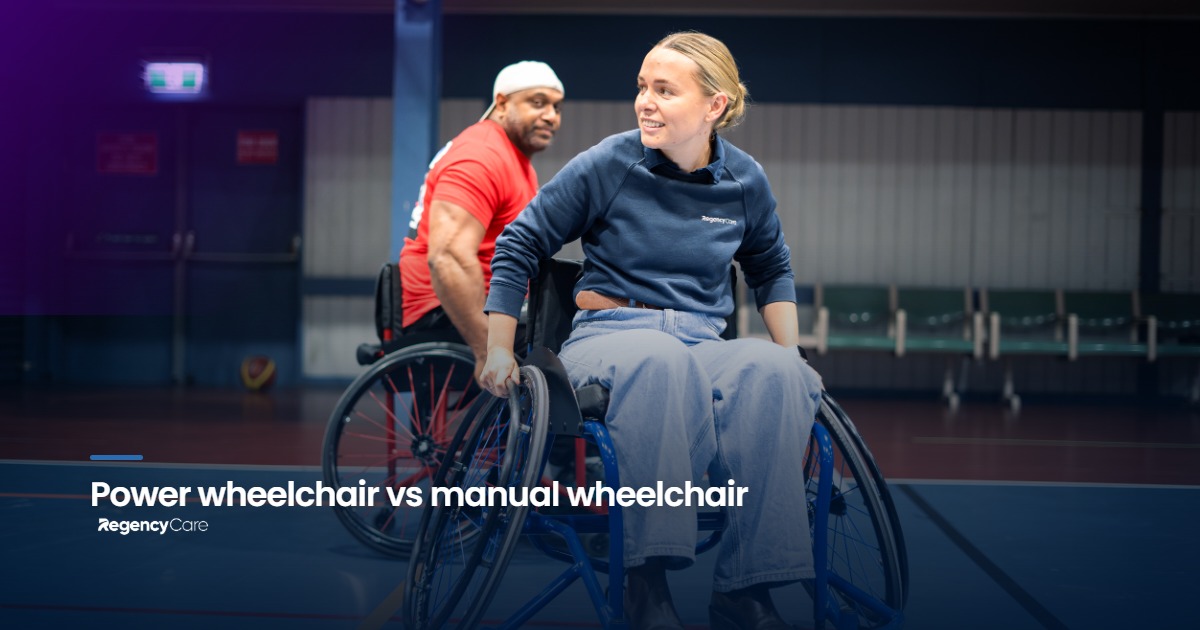
• Power wheelchairs and manual wheelchairs
• Mobility scooters
• Electric adjustable beds, including bariatric options
• Patient lifters and hoists
• Shower commodes
• Bathroom safety equipment
• Pressure care mattresses
• Transfer aids
• Bariatric equipment for higher weight capacities
Every item is backed by servicing and maintenance, so it keeps working safely for as long as you need it.
Why an OT assessment matters
For most equipment above a low-cost threshold, the NDIS wants evidence from a qualified assessor, usually an occupational therapist. The OT assesses your needs, recommends the right equipment for your circumstances, and writes the justification that links the item to your disability and goals.
This is not a hurdle to get around. A good assessment makes sure you get equipment that actually suits you, your home and your body, rather than a best guess. It also gives your planner the evidence they need to approve funding without delay.
It helps to know that the NDIS groups assistive technology by cost and complexity. Lower-cost, everyday items are simple to buy, while higher-cost or more complex equipment, like a power wheelchair or a hoist, usually needs an assessment and sometimes a quote before it is approved. Knowing roughly where your equipment sits tells you how much evidence to expect to provide, so there are no surprises.
How to talk to your Support Coordinator
about equipmentr
Your Support Coordinator is there to help you use your plan well. When equipment is on your mind, tell them early. Be specific about what is hard right now, whether that is transferring safely, sleeping comfortably, or getting around your home.
Ask them to connect you with an OT for an assessment, and ask what evidence your plan needs. The clearer you are about the problem, the easier it is for everyone to find the right solution for you.
The short version
Understanding what NDIS funds for equipment takes the fear out of the process. Most assistive technology sits under Capital supports, needs to meet the reasonable and necessary test, and is backed by an OT assessment. Once you know that, the rest is just working through the steps with people who know the system.
Why These Gifts Matter
These products are designed to enhance daily life by making tasks easier and more manageable. Whether it’s preparing meals, reaching items, or simply making hot drinks, these gifts promote independence and comfort. They’re not just practical—they show thoughtfulness and care, helping loved ones maintain dignity and self-sufficiency.
Explore these products and more at Regency Care https://regencycare.com.au