NDIS Assistive Technology Funding: The Complete Guide
If you or someone you support has an NDIS plan, assistive technology is one of the most useful things it can pay for, and one of the most confusing to actually get. This guide walks through what the NDIS funds, how much paperwork each item needs, and the steps from first conversation to equipment in your home. It is written for people in the Central West and regional NSW, where getting the right gear should not mean a trip to Sydney.
What counts as assistive technology
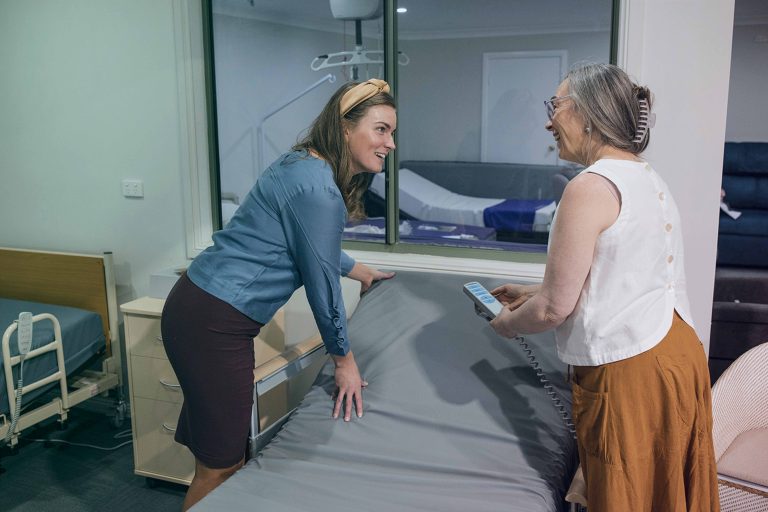
Assistive technology, or AT, is any equipment or device that helps you do something more safely or more independently. It is a broad category. Mobility equipment like wheelchairs, scooters and walkers sits inside it, and so do hospital and adjustable beds, pressure care mattresses and cushions, hoists and transfer gear, bathroom and toileting equipment, and smaller daily living aids. If a piece of equipment helps you move, rest, wash, or get through your day with less difficulty, it is almost certainly AT.
The three cost tiers, and why they matter
The NDIS sorts assistive technology by price, because the amount of evidence you need rises with the cost of the item. Getting the tier right is the single thing that most affects how quickly you are approved.
- Low-cost AT, under $1,500 per item. The lightest touch. If the item is reasonable and related to your disability, you can usually buy it without a formal assessment, and some low-cost items can be purchased flexibly from your existing budget.
- Mid-cost AT, $1,500 to $15,000 per item. You will generally need advice from an appropriately qualified person, such as an occupational therapist or a suitably trained AT advisor, confirming the item suits your needs. Note the upper limit here was lifted from $5,000 to $15,000, so some equipment that once needed a full assessment now sits in this middle band.
- High-cost AT, over $15,000 per item. The most thorough. These items need a formal assessment by a qualified assessor, usually an occupational therapist, plus a quote, before the NDIS will fund them. Custom wheelchairs and complex seating often land here.
Which part of your plan pays for it
Most assistive technology is funded from the Capital Supports part of your plan, under the Assistive Technology budget. Capital funding is set aside for specific items, so it cannot be spent on anything else. Some lower-cost items can be bought more flexibly from your Core budget. The simplest rule of thumb: the bigger and more specialised the item, the more likely it sits in your Capital AT budget and needs its own evidence and quote.
The evidence you need, step by step
For anything above the low-cost tier, the process runs in a predictable order, and knowing it up front saves weeks.
- Assessment. An occupational therapist or AT assessor works out what you need and why, matching the equipment to your goals, your body and your home. For high-cost items this is a formal written assessment. Our guide on how long an NDIS wheelchair takes walks through what this looks like in practice.
- Quote. A supplier provides a written quote for the specific item. This is where a local supplier who knows the NDIS process keeps things moving, because an incomplete quote is one of the most common reasons approvals stall.
- Approval. The evidence and quote go to the NDIS. Once approved, the item is ordered, fitted and delivered.
The strength of the assessment is what carries the whole thing. The clearer the link between your disability, your goals and the specific item, the smoother the approval.
Renting while you wait, or while your needs change
Approvals take time, and sometimes your needs are still settling, after a hospital stay or a change in condition. The NDIS itself notes that renting can be the better option when your needs are likely to change. Hiring a wheelchair, a pressure mattress or a hospital bed in the meantime means you are not going without while the paperwork moves, and it lets you trial equipment before committing to a long-term item.
Getting it right in regional NSW
Living outside the city should not mean fewer options or longer waits. A local supplier who can assess alongside your OT, quote correctly the first time, fit the equipment properly and service it when something goes wrong is worth far more than the cheapest online price. Regency Care works with participants, families, occupational therapists and support coordinators across the Central West, from our Parkes hub, to find equipment that genuinely fits the person.
If you are not sure which tier your equipment falls into, or where to start, the easiest first step is a conversation. Book an assessment or call us on 1300 622 122, and we will walk you through it.