Power assist or power wheelchair? How to choose
If pushing a manual wheelchair is getting harder, you have two main options. You can add power assist to the chair you already use, or move to a power wheelchair. Both keep you moving. The right choice depends on your strength, your day and the places you need to get to.
What power assist does
Power assist is a small motor that fits to a manual wheelchair. Some sit behind the chair and push when you push, like the SmartDrive. Others replace the rear wheels with motorised ones. You still propel the chair yourself, but every push goes further and hills feel flatter.
Power assist suits you if you:
- can still self-propel, but tire on longer distances, slopes or rough ground
- want to keep using your arms and stay active
- need to fold the chair and lift it into a car
- are happy with your current chair and seating
What a power wheelchair does
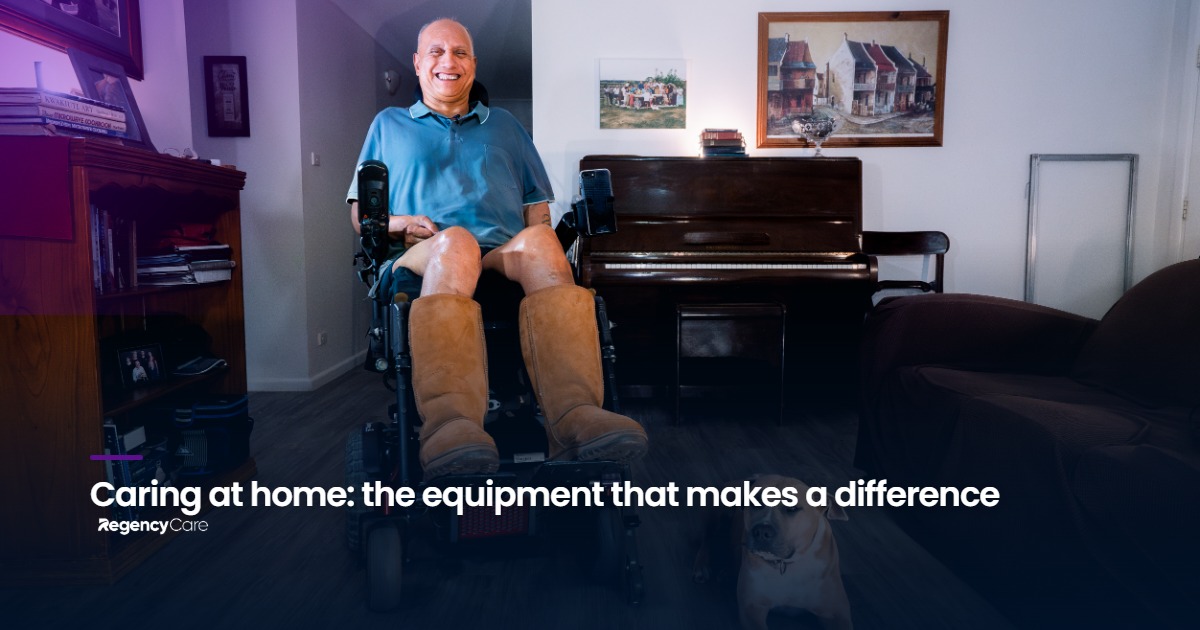
A power wheelchair is driven entirely by its motors, usually with a joystick. It doesn’t rely on your arm strength at all. Power chairs can also include tilt, recline, leg elevation and standing functions, which help with pressure care, comfort and reaching things.
A power wheelchair suits you if you:
- have limited upper body strength or endurance
- have shoulder pain or injury from years of pushing
- need tilt or recline for pressure care or positioning
- spend most of the day in your chair and travel longer distances
Questions to talk through with your OT
Your occupational therapist will look at more than the chair. These are the questions that usually decide it:
- How far do you go in a day? Around the house and to the car is different to a full day out in town.
- What’s the ground like? Gravel driveways, grass, kerbs and hills matter a lot in regional NSW.
- How do you travel? A folding manual chair with power assist fits most cars. A power chair usually needs a ramp or a wheelchair accessible vehicle.
- How are your shoulders? Protecting them now can keep you independent for longer.
- What changes are ahead? If your needs are likely to change, it’s worth planning for that now.
Cost and funding
Power assist is usually the lower-cost option, because you keep your existing chair. Power wheelchairs cost more, especially with tilt, recline or custom seating. Both are assistive technology that the NDIS can fund when they’re reasonable and necessary for your disability, and Support at Home can fund them for older Australians who are assessed as needing them. For anything mid or high cost, you’ll need an assessment and written recommendation from an OT. Our guide to NDIS assistive technology funding explains how that works.
See both in your own space
A chair that feels fine on a flat floor can be a different story on your driveway or in your kitchen. Where possible, we bring equipment to you so you and your OT can see how it handles your home, your car and your usual routes before anything is ordered.
For a wider comparison, read power wheelchair vs manual wheelchair, or browse our power wheelchairs and manual wheelchairs.
Talk to us
Not sure which way to go? Book a time to meet one of the team and we’ll talk it through with you and your OT. Or call 1300 622 122. If you send an enquiry online, we’ll be in touch within one business day.