Why equipment maintenance matters for your clients’ outcomes, and yours
Most OTs think hard about equipment at the assessment stage, then move on to the next referral. What happens to that equipment over the following years gets far less attention, and that gap quietly undermines client outcomes. Proactive assistive technology maintenance is not just a logistics issue for the NDIS, it is a clinical and professional one that sits closer to your practice than it might seem.
How equipment degradation affects functional outcomes
Equipment does not fail all at once. It degrades. A wheelchair cushion loses its pressure-relieving properties. A hoist sling frays. Bed actuators slow and lose positioning accuracy. Long before anything breaks, performance drifts, and so do outcomes.
The participant you assessed for safe transfers is now at higher risk. The pressure care you prescribed is no longer effective. Degradation erodes the clinical benefit you worked to achieve, usually without anyone noticing until something goes wrong.
A worn hoist sling is a good example. It rarely fails on a predictable date. It weakens gradually until one transfer goes wrong, and by then the risk has been building for months. Scheduled checks catch that wear while it is still just a note on a service sheet, not an incident report.
The equipment failures OTs encounter most
Certain failures recur across caseloads. Hoist and sling wear that compromises safe manual handling. Wheelchair tyre, brake and battery decline that reduces mobility and safety. Bed motor and actuator faults that undermine positioning and pressure care. Commode and bathroom equipment corrosion that creates hygiene and safety risks.
The common thread is timing. These failures cluster around predictable service intervals, which means most are preventable with a maintenance schedule.
Service cycles for common assistive technology
Different equipment needs different attention. As a working guide:
- Lifters and hoists: service every 6 months, given their direct role in safe manual handling.
- Power wheelchairs: service around every 500km of use.
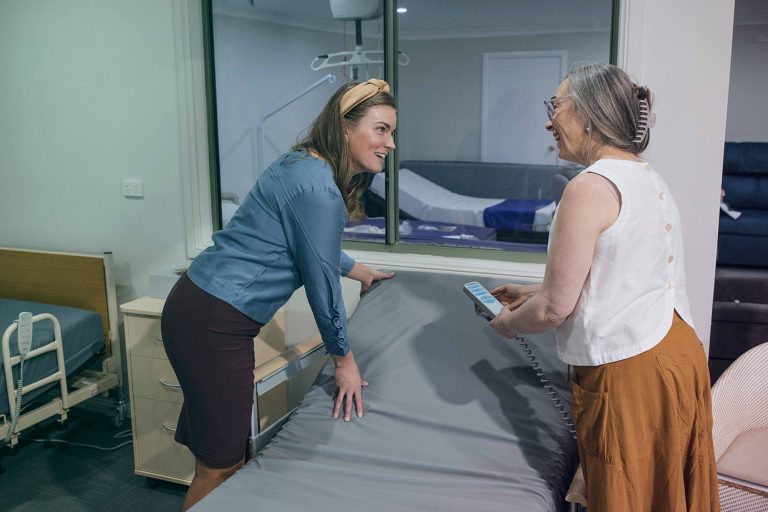
- Electric beds: service every 12 months.
Building these cycles into your client management means problems are caught on schedule, not after an incident.
Documenting equipment condition as ongoing management
Assessment is a moment; equipment use is a timeline. Noting equipment condition at reviews, and knowing its service history, turns AT into something you actively manage rather than hand over and forget.
This documentation also strengthens plan reviews and replacement requests. When you can point to a maintained item reaching the end of its safe life, the case for funding a replacement almost writes itself.
Even a short note at each review, recording condition, wear and any concerns, builds a picture over time that no single assessment can. That record is where a maintenance program and your clinical judgement meet, and it is what turns a reactive replacement into a planned one.
How a maintenance program protects you professionally
There is a professional dimension too. If a client is injured by equipment you prescribed, the questions that follow will include whether it was being maintained. A documented maintenance program shows due diligence and shared responsibility.
Proactive maintenance is quietly part of good practice. It protects the client’s outcomes and your professional position at the same time.
It also supports continuity of care. When equipment is serviced and documented, the next clinician to pick up the client inherits a clear record rather than guesswork, which protects the participant across changes in therapist, support worker or plan.
Make maintenance part of the plan
Maintenance needs funding too, and that is easy to overlook at the assessment stage. When you recommend equipment, consider flagging servicing and repair costs so they are built into the participant’s plan from the start.
Equipment funded without a maintenance budget often ends up neglected, which is exactly the outcome that undermines your original recommendation. A small line for servicing protects a much larger investment.
What Regency Care’s PM Program delivers
Regency Care’s Preventative Maintenance Program takes the maintenance burden off your desk. It schedules servicing at the right intervals, keeps documented records of every visit, and flags equipment reaching end of life.
For OTs, that means clients whose equipment keeps performing, evidence ready for plan reviews, and no admin for you to chase. Referring a client is straightforward and keeps their AT working as intended.
The takeaway
Assistive technology maintenance is a clinical responsibility, not just a service call. Degradation erodes outcomes, most failures are predictable, and a documented program protects both your clients and your practice.